Using Dogs to Detect American Foulbrood
Why Dogs?
Dogs’ unique scenting abilities give them the power to save our honeybees, here’s why:
Dogs have incredible noses, these noses have been used to find everything from maladies in humans (cancer, diabetes, tuberculosis, diabetes, Parkinson’s, seizure, and now, malaria), to locating trapped people under snow, buildings, and water – to bomb detection, narcotics detection, wildlife conservation, bed bugs and other pests (including moths, screw worms, termites, and many more), helping with archaeology digs, and much much more.
Powerful enough to detect substances at concentrations of one part per trillion—(a single drop of liquid in 20 Olympic-size swimming pools), a dog’s nose can ‘see’ equivalent to 3000kms vs. our 3kms. Dogs sniff with separate nostrils, right to start, left if the scent is found to be benign. If the scent is interesting the dog will continue to use it’s right nostril. This is because each hemisphere in the dog’s brain is dedicated to different kinds on smell. Throughout our dogs live their nose develop with new information, with new scents to catalogue, and new ways to confront challenges.
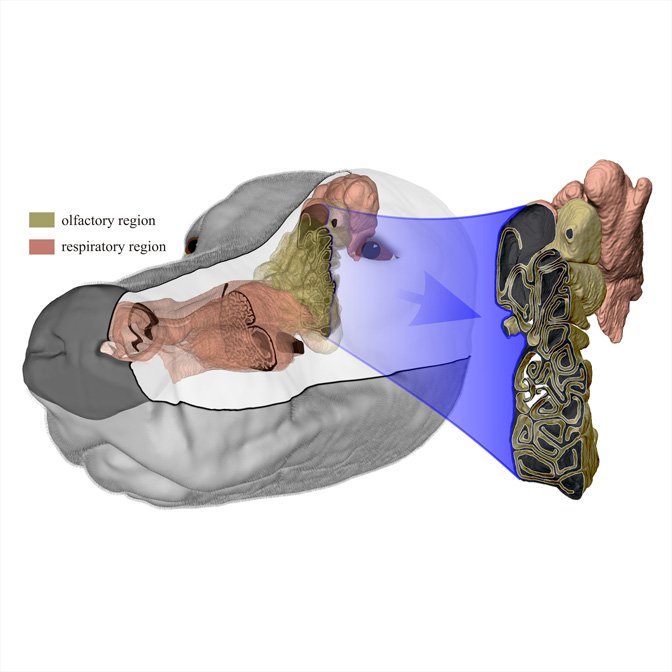
A human’s nose contains 5 million scent receptors, with dogs dwarfing our number by a whopping 300 million scent receptors. This is because dogs have structures within their long snouts that create intricate labyrinths called turbinates. A dog’s turbinates would stretch out to cover a handkerchief, and ours only a postage stamp. Dogs shame us in the brain department as well… with the part of a dog’s brain that is devoted to analyzing smells is about 40 times greater than ours.
“Researchers at Duke University found that a randomly selected fox terrier could after three weeks detect the scent of a fingerprint on a glass slide when compared to four clean slides. When the researchers placed the slides outside in the rain and dust, the dog was still able to pick out the slide with the fingerprint after 24 hours of weathering.”
Dogs can memorize, catalogue, and collect historical scent. This is part of the reason why a dog’s scent processors are so much larger than our own. Scientists have been attempting to replicate this ability in robots but have so far failed.
“Another study reported a male German wirehaired pointer being trained to detect screwworm (Cochliomyia hominivorax)-infested animals, with a success rate of 100% (265 tests) with training dummies and 94.7% (18 successes for 19 tests) with screwworm-infested animals.”
“Overall, the mechanism of olfactory detection and the ensuing innate canine olfactory abilities make them more sensitive detectors than the best man-made analytical instruments.”
In my experience of training dogs in detecting wild bees and honeybee diseases (in this case American Foulbrood), I was always extremely impressed with how quick the dogs caught on to the different smells. Not only are dogs talented sniffers, but they desire to do the work. Many are driven beyond belief to just spend their days sniffing, helping, and having the company of their handler. There is no ulterior motive with dogs, they will simply do what you ask, happily.
If we let them, dogs could save a lot of what we take for granted, certainly our agricultural industries, the hobbyist’s hives, and the bees themselves…they certainly deserve it.
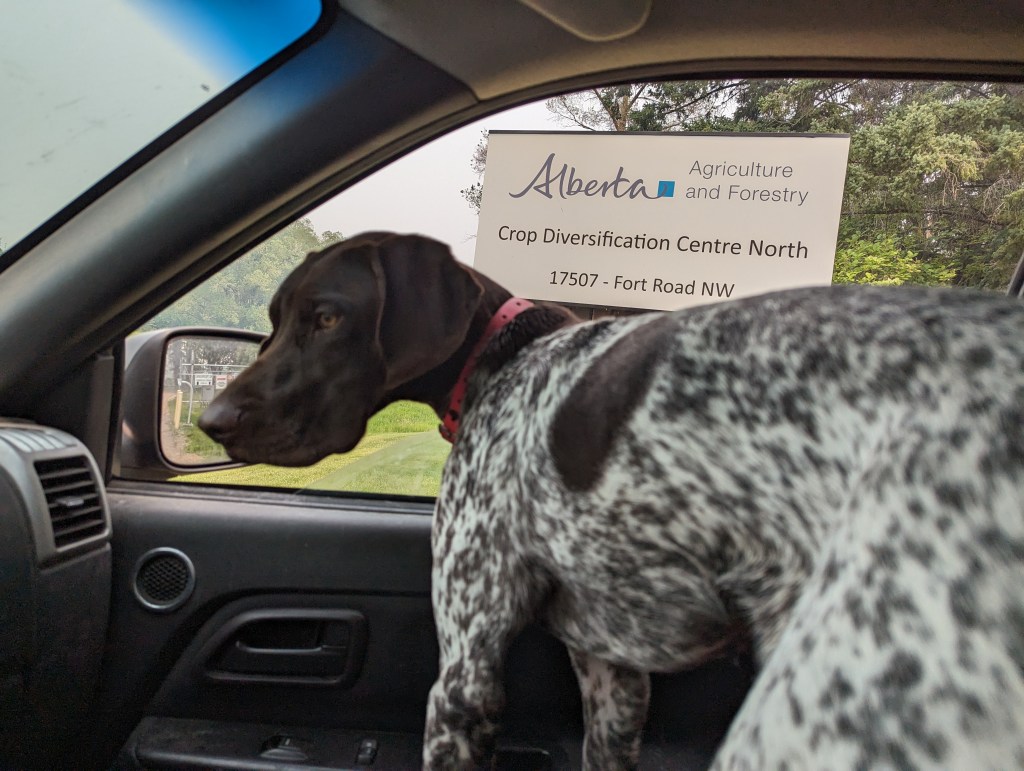
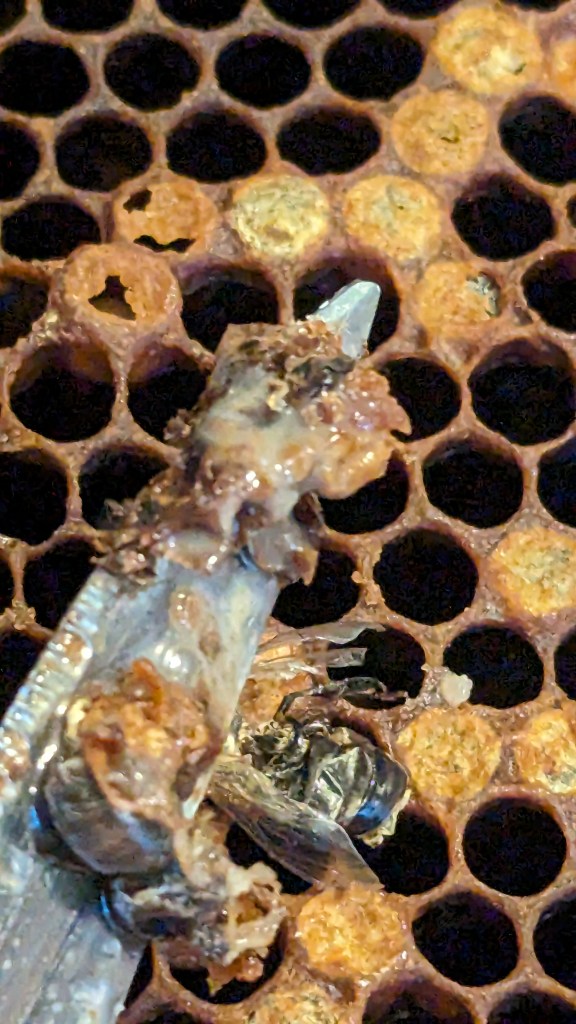
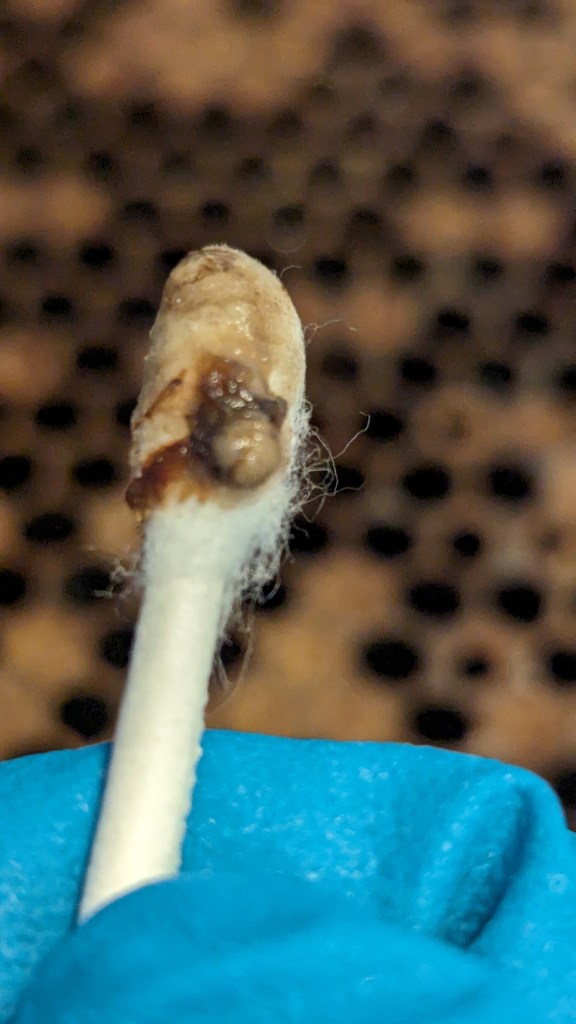
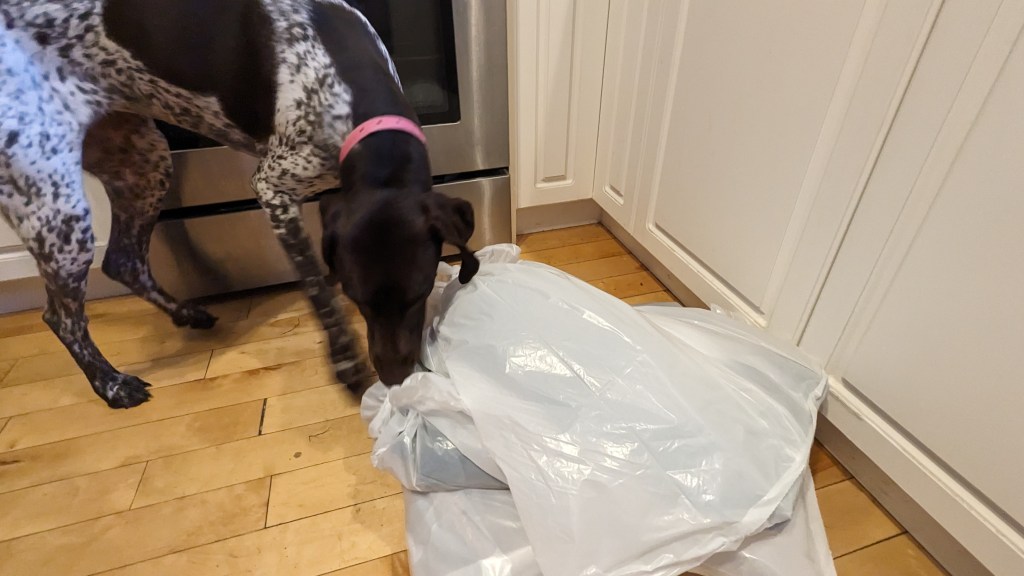
Foulbrood is a disease on a rampage killing honeybees all over North American, costing producers millions of dollars. If we could use the incredible resource in a dog’s nose to help, why shouldn’t we, before this disease destroys livelihoods.
Tyson P. Dogs’ Dazzling Sense of Smell. Nova Science Now. posted 10.04 www.pbs.org/wgbh/nova/nature/dogs-sense-of-smell.htm
Canine Olfaction: Physiology, Behavior, and Possibilities for Practical Applications: https://www.ncbi.nlm.nih.gov/pmc/articles/PMC8388720/
American Kennel Club: https://www.akc.org/expert-advice/news/the-nose-knows/
 Dogs Find Bees